TIERRA DEL FUEGO · CHILE AND ARGENTINA
THE SELK'NAM
PEOPLE
The land has names.
History has continuities.
Photograph: H. Bjerck / NTNU Vitenskapsmuseet · CC BY 2.0
PATAGONIA IN DEPTH
Memory inhabits Karukinka
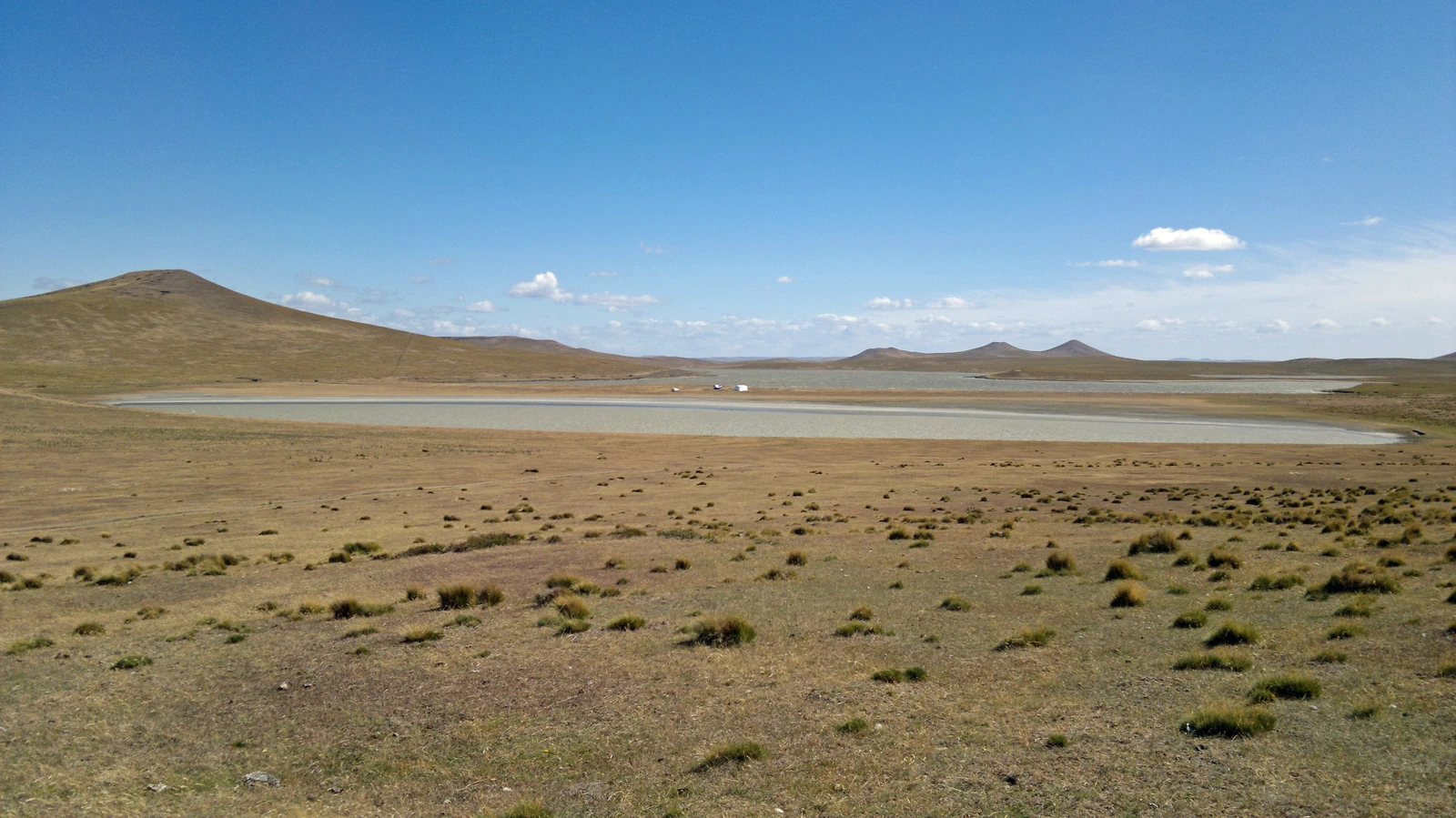
In Tierra del Fuego, an open plain is not an empty territory. Water, passes, animals and camps formed a geography known and named by its inhabitants. Selk'nam history allows us to read that landscape again as a space of relationships.
The Selk'nam developed primarily land-based ways of life on Isla Grande. Hunting, gathering and kinship shaped their use of the territory. Their history includes immense colonial violence, alongside the continuing presence of families and communities on both sides of the border.
Understanding that continuity means examining how the narrative of extinction was constructed. Descendants and their organisations have challenged that idea, sustaining memory and identity. State recognition is one episode in that process; the people's existence precedes it.
Sources: National Library of Chile · Selk'nam ritual, shamanism and music · Leonor Riesco · Judicial inquiry, 1895–1904; research published in 2021 · Library of the National Congress of Chile · Law 21,606
01 — INHABITED LAND
Moving within
a known world
Selk'nam mobility was connected with food availability, seasons and social ties. Journeys between camps belonged to an organised territorial life. Open land could contain known boundaries, significant places and agreements that needed no fences to exist.
Haruwen were territorial areas associated with kinship groups. Recognising that organisation reveals how later concessions and ranches occupied already inhabited places. The change was political too: it altered who could travel, obtain resources and make decisions about the land.
Isla Grande contains steppe, forest, shores and lakes. Reading its environments requires attention to those differences and each place's history. The names of distinct peoples — Selk'nam, Haush, Yaghan and Kawésqar — are not interchangeable, nor do they describe a single way of inhabiting the archipelago.
Sources: National Library of Chile · Selk'nam ritual, shamanism and music · Kami Museum · Indigenous peoples of Tierra del Fuego
02 — SUBSISTENCE
One animal,
many materials
The guanaco played a central part in Selk'nam subsistence. It provided food and materials for clothing, shelter, tools and cords. This relationship demanded knowledge of animal behaviour and careful processing of resources.
Anne Chapman's accounts, together with the testimonies she collected, show a diet more diverse than a single prey species: gathering plants and using other animals were part of everyday life. Activities and journeys involved a division of work among family members.
The landscape of hunting can still be recognised on the steppe, but fences, livestock farming, roads and settlements have changed it. Connecting nature with history prevents a contemporary scene from being presented as an exact reproduction of the territory before colonisation.
Sources: Anne Chapman · Los Onas: vida y muerte, testimonios · Cultural Heritage Service · Selk'nam bows in Punta Arenas
03 — TECHNICAL KNOWLEDGE
The precision
of the bow
Bow and arrow brought together wood selection, cord preparation, design and practice. A tool's effectiveness depended on a whole system: the bow, the projectile and the user's experience. Hunting technology also had social and symbolic dimensions.
Alfredo Prieto studies bows held by the Regional Museum of Magallanes and the Maggiorino Borgatello Museum. They are especially valuable because wood survives less readily than many projectile points. Uneven material preservation shapes what archaeology can reconstruct.
Studying these objects allows techniques and changes to be discussed through concrete evidence. Their heritage value includes the chance to reconnect them with memories and revitalisation, recognising both the archive's limits and community knowledge.
Sources: Cultural Heritage Service · Selk'nam bows in Punta Arenas
04 — RITUAL AND NARRATIVE
The Hain
needs context
The Hain was a complex ceremony of initiation, transmission and social organisation. Ethnographic records describe characters represented through body paint and masks, alongside narratives about the world's order and relations between men and women.
The most widely circulated photographs capture moments of that ceremony and have travelled far from their context. Reading them requires knowing who made the record, when and what interpretation accompanied it. A figure's visual power does not make its meaning freely available for any use.
Archives enable study, while communities maintain their own relationships with heritage. A public account can introduce the Hain's importance and existing sources without pretending to speak in a ritual voice or inventing content. Description and appropriation are different choices.
Sources: National Library of Chile · Selk'nam ritual, shamanism and music · National Library of Chile · Mythical ancestors
05 — COLONISATION
Expansion
had victims
Expanding livestock farming and the search for resources profoundly changed Fuegian territory in the late nineteenth century. Violence included persecution, massacres, displacement and confinement. Disease and the separation of families contributed to demographic and cultural catastrophe.
Leonor Riesco's research into the judicial inquiry of 1895–1904 examines discourses that legitimised extermination and cultural subordination. This body of documents shows that the violence was debated and recorded at the time. Its analysis identifies responsibilities and challenges accounts presenting that outcome as inevitable.
Speaking of genocide requires grounding the word in research and documents. It also means recognising those affected and those who survived. Population decline and the destruction of ways of life do not justify erasing the people's later existence.
Sources: Leonor Riesco · Judicial inquiry, 1895–1904; research published in 2021
06 — MEMORY AND ARCHIVES
Listen beyond
the document
Public knowledge of Selk'nam history draws on many sources: archaeology, testimony, sound recordings, photographs and administrative documents. Each offers possibilities and silences. An image reveals details; a voice may explain relationships left outside the frame.
Anne Chapman's work with Selk'nam people preserved testimony about ways of life and historical experience. Consulting those materials means recognising the people who shared knowledge and the mediation of whoever recorded it. A source is a relationship between people as well as a document.
Contemporary community accounts extend that archive. They help revisit genealogies and affirm identities that were denied. Museums and research can accompany this process by making authorship visible and distinguishing evidence, interpretation and unresolved questions.
Sources: Anne Chapman · Los Onas: vida y muerte, testimonios · Kami Museum · Indigenous peoples of Tierra del Fuego
07 — CONTINUITY
Recognising
a presence
In Chile, Law 21,606, published on 19 October 2023, included the Selk'nam among the Indigenous peoples or ethnic groups recognised by the state. The amendment contradicts their reduction to a closed past. Its specific scope should be read in the law itself.
In Argentina, the Rafaela Ishton community has a history of organisation and recognition documented by laws and institutions. Law 25,325 of 2000 provided for a property to be transferred to INAI for subsequent allocation to the community.
These records show institutional continuity in both countries. Recognition does not encompass every experience or resolve territorial and cultural demands by itself. It does, however, place communities within the present and future of Tierra del Fuego.
Sources: Library of the National Congress of Chile · Law 21,606 · Argentina · Law 25,325, Rafaela Ishton community
08 — CONTEMPORARY TERRITORY
Caring and passing
knowledge on again
Contemporary initiatives connect memory with community life and territorial management. Tierra del Fuego's government documented Rafaela Ishton's participation in projects supported by the Native Forests Law through a Comprehensive Community Plan. The work brings organisation, current needs and forest relationships together.
Ancestral remains have also been returned to the community. Return changes a historical relationship between institutions, research and Indigenous peoples, requiring decisions about treatment, memory and care that belong to the participants.
Understanding Selk'nam culture in the present means attending to these voices and projects. When using images or cultural expressions, identify provenance, authorship and conditions of use. A landscape photograph can open the reading; representing the people requires its own context.
Sources: Tierra del Fuego · Rafaela Ishton community projects · Tierra del Fuego · Return of ancestral remains, 2016
LIVING TERRITORIES
The land remembers.
Families continue.
Karukinka can be read as landscape and as inhabited memory. Understanding Selk'nam history means holding together territorial knowledge, the gravity of violence and community continuity. This reading makes room for people who have had to affirm their presence again and again.
ESSENTIAL QUESTIONS
Keep
exploring
Are the Selk'nam extinct?
No. Communities and revitalisation efforts exist in Chile and Argentina. The history of genocide does not erase that continuity.
Where is their historical territory?
On Isla Grande de Tierra del Fuego. Their territorial organisation and movements should be distinguished from those of other peoples in the archipelago.
What changed with Chile's 2023 law?
Law 21,606 included the Selk'nam among the Indigenous peoples or ethnic groups recognised by the Chilean state.
What was the Hain?
A complex ceremony of initiation and social and ritual transmission. Its images need historical context and recognition of the community's relationship with that heritage.