CHILE · ARGENTINA · LIVING TERRITORIES
THE YAGHAN
PEOPLE
The channels hold routes.
Families keep memory alive.
Photograph: Mat Austro · CC BY 4.0
PATAGONIA IN DEPTH
The sea as territory
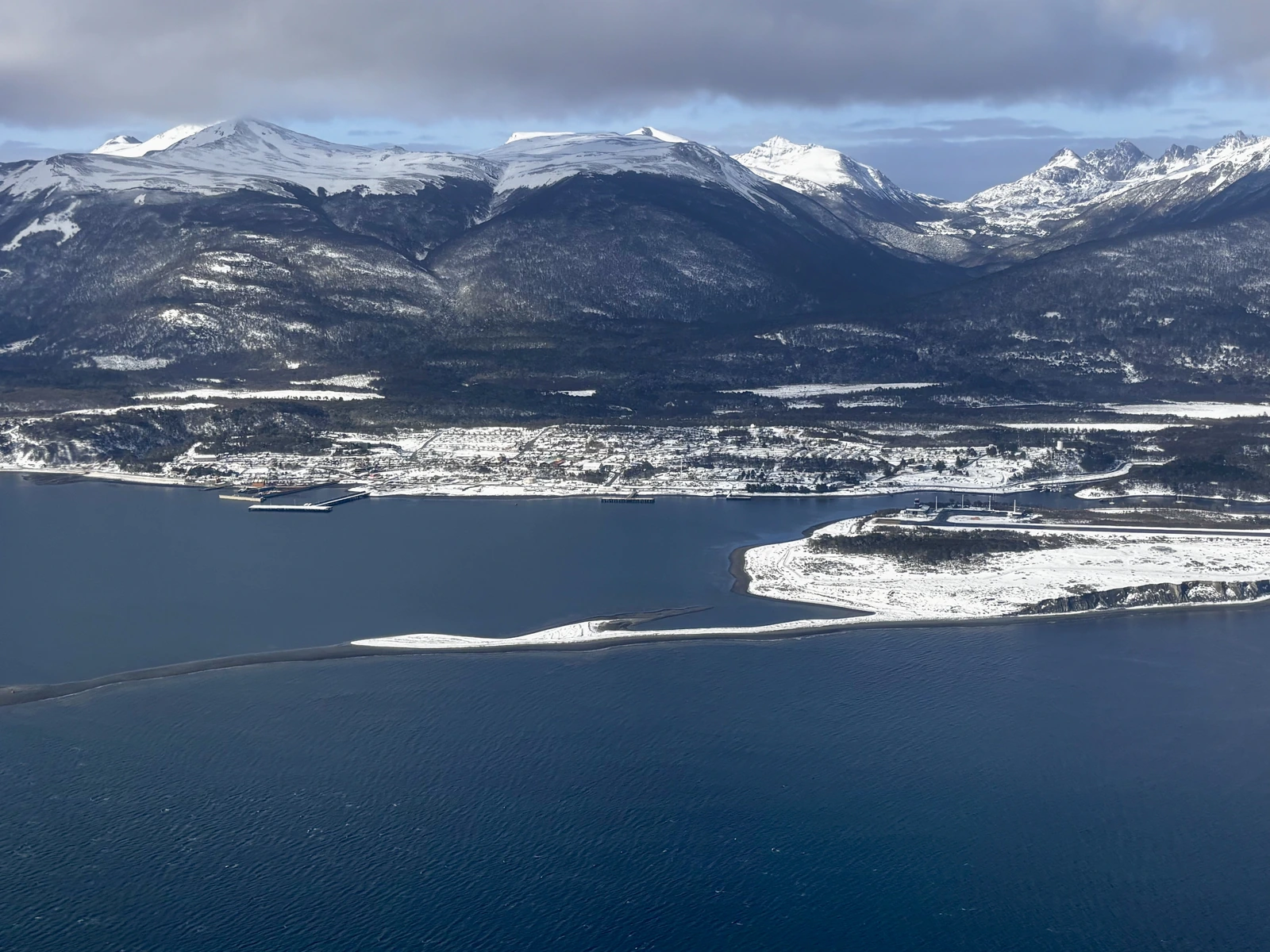
Water can separate two shores. It can also connect one home with another, lead to a source of food and hold a family's name. In the far south of South America, understanding Yaghan territory means seeing the channels as a continuous space: the sea has been a route, a livelihood and a place of knowledge.
The Yaghan people are historically connected with the Beagle Channel and the archipelagos south of Tierra del Fuego. Their present-day communities, accounts and revitalisation efforts are part of Chile and Argentina. Ancestral navigation belongs to that history; the people who pass it on belong to the present.
This exploration connects landscape, technology, language and memory. Museum and archival records are read alongside contemporary initiatives, recognising that a culture has its own voices and that no collection can contain it in full.
Sources: Indigenous Peoples Service · Yaghan language · Yagan Usi Museum · New exhibition, 2024
01 — INHABITED GEOGRAPHY
A path
between the islands
The shores of Yaghan territory extend across islands, bays and sea passages. Viewed from land, they may look like isolated fragments. Navigation changes the perspective: they become a network of connected places, where shelter, resources and conditions for continuing a journey can be recognised.
Archaeology documents a long presence of canoeing groups in this area. Remains on Navarino and the Beagle shores include occupations several millennia old. Such evidence reveals a deep past; assigning a contemporary ethnic name to each ancient occupation requires specific analysis.
Today's national borders cross a territorial history that predates them. Naming Chile and Argentina helps locate administrations and communities, while reading this maritime territory restores relationships a line on a map cannot explain by itself.
Sources: Yagan Usi Museum · Ancestral inhabitants of Cape Horn
02 — NAVIGATION
The canoe
makes the journey possible
Bark canoes carried families, tools and food. Each vessel brought together knowledge of materials, construction and handling on the water. Its size and shape had to suit the conditions of the archipelago and the needs of those travelling aboard.
Models and records held by the museum show how space was organised aboard, including an area prepared to keep a fire on a protective base. They also document women's work at the paddles and the transmission of navigation practices. Each description must be understood in its period and in relation to the type of vessel it represents.
Dugout canoes appear in the records in the early twentieth century. Cultural continuity includes these technical changes: knowing a tradition means attending to its transformations, its makers and the conditions that made it possible.
Sources: Yagan Usi Museum · Ancestral inhabitants of Cape Horn · Yagan Usi Museum · Return of the Gusinde Collection, 2019
03 — MARITIME TECHNOLOGY
Bone
becomes a tool
Hunting marine mammals required specialised implements. Bone harpoons and their points reveal craftsmanship connecting the shape of prey, available materials and the practice of hunting from the water. Studying them brings us closer to specific technical decisions.
Fuegian collections hold archaeological and ethnographic pieces, including detachable harpoons and fixed points. Comparing examples helps identify variation and historical change, although an isolated object cannot reveal the entire process of making and using it.
The museum also documents Martín González Calderón's work in recovering these technologies through craft. Experimenting with materials and older models opened a way to pass on knowledge from within the community, connecting research, practice and family memory.
Sources: Yagan Usi Museum · Fuegian harpoons
04 — FIBRES AND HANDS
Weaving also means
knowing the ground
Yaghan basketry begins with a precise relationship with plants. Rushes must be identified, gathered and prepared before becoming weaving fibres. Their thickness, flexibility and strength influence the final shape of baskets and other pieces.
The process documented by the museum includes preparation using heat, twisting and weaving. An awl helps make a passage for the fibre. This sequence brings together skills learned with others: the finished piece retains decisions about selection, tension and design.
Research by Gloria Ochoa Sotomayor and Francisca Marticorena Galleguillos considers the practice as a continuing connection between families, community and nature. Recognising the weavers and their authorship reveals basketry as work, transmission and contemporary cultural expression.
Sources: Yagan Usi Museum · Basketry technique · Ochoa and Marticorena · Lazos de resistencia, 2022
Photograph: Mat Austro · CC BY 4.0
05 — WORDS
A language
circulates again
Yaghan, also called yagankuta in revitalisation materials, has its own linguistic history. Chile's National Indigenous Peoples Service records different historical varieties and notes that its genetic affiliation has not been clearly established.
Current efforts include workshops, intercultural education and publications. The small Yágankuta dictionary connects Cristina Zárraga Riquelme's work with knowledge passed down by Cristina Calderón Harban. These initiatives bring generations together and allow words to be heard and studied again in context.
Writing involves different proposals and revisions; there is no agreed writing system across all communities. It is therefore important to retain the authorship and provenance of materials, rather than treating a spelling found in one source as universally equivalent. Revitalisation is sustained by particular people.
06 — TRANSFORMATIONS
Contact
transformed the territory
The arrival of expeditions, missions and new settlements changed relationships across the archipelago. Introduced diseases, pressure on navigation areas and forced assimilation gravely affected the Yaghan people. The history of contact must account for these consequences and the responses of those who lived here.
European documents provide information but also reflect the hierarchies and categories of their time. Words such as ‘primitive’ or ‘disappearance’ can conceal knowledge, decisions and continuities. Reading an archive requires distinguishing what was observed, the observer's interpretation and the voices left unrecorded.
Present-day families and communities change that reading. Their memories identify people behind photographs and objects, challenging accounts that reduce a history to loss. Historical violence and the people's continuity must both remain part of the story.
Sources: National Library of Chile · Yámanas, historical archive · Yagan Usi Museum · Return of the Gusinde Collection, 2019
07 — HERITAGE AND RETURN
Objects
recover their connections
Some of the collections assembled by Martin Gusinde circulated between institutions in Santiago before returning to the far south. Since 2019, the museum and the Indigenous Yaghan Community of Bahía Mejillones have participated in processes for the return of heritage objects.
A return allows objects, photographs and family histories to reconnect in their territory. The work includes shared research, identification of ancestors and investigation of the pieces' provenance. Documented handovers are stages in a process, not proof that every collection has been returned.
A third restitution took place in 2021. Community involvement raises a central question: who can tell the history of objects, and how is their care agreed? Heritage gains meaning through these relationships as well as through its material value.
Sources: Yagan Usi Museum · Return of the Gusinde Collection, 2019 · Serpat · Third return of heritage objects to the Yaghan people, 2021
08 — COMMUNITIES
A people
of the present
The Yaghan people's contemporary presence is expressed through organisations, families, crafts and cultural projects. In Argentina, INAI reported the registration of legal status for Ushuaia's Yagan Paiakola community in 2021. That act documents institutional recognition of a living community.
In Puerto Williams, the renewed Yagan Usi – Martín González Calderón Territorial Museum, inaugurated in 2024, incorporated a territorial perspective developed through dialogue with the community. Its name honours a leading figure in canoe navigation who worked with the museum.
The exhibition connects ancestral history, colonisation and cultural continuity. A visit can deepen understanding of the landscape and raise questions about memory and transmission. To learn about community initiatives, use their public channels and respect the conditions agreed by participants.
Sources: INAI · Yagan Paiakola community, 2021 · Yagan Usi Museum · New exhibition, 2024
LIVING TERRITORIES
Water carries us.
Memory guides us.
Reading Yaghan territory means recognising a geography of connections. A canoe, a basket and a word bring materials, knowledge and people together. The southern horizon gains depth when the authors of that knowledge are recognised and the present takes its place in history.
ESSENTIAL QUESTIONS
Keep
exploring
Does the Yaghan people still exist?
Yes. Contemporary communities and cultural processes are documented in Chile and Argentina. Their presence extends beyond historical collections.
Are the Yaghan and Kawésqar the same people?
They are distinct peoples with their own languages and histories. Both developed canoe-based ways of life in different parts of the southern territory.
Where can I learn about their history and present?
The Yagan Usi – Martín González Calderón Territorial Museum in Puerto Williams offers an exhibition with a territorial perspective and community participation.
Does the Yaghan language have a single writing system?
Revitalisation materials use proposed writing systems whose authorship should be recognised. The institutional source consulted states that there is no agreed writing system.